Vape.ch Switzerland Guide
Vaping, COVID and flu: what does science say?
COVID was only the most visible part of the discussion. In daily life, flu, RSV, common cold viruses and newer seasonal respiratory infections also matter.
Context Respiratory infections COVID & flu For adults
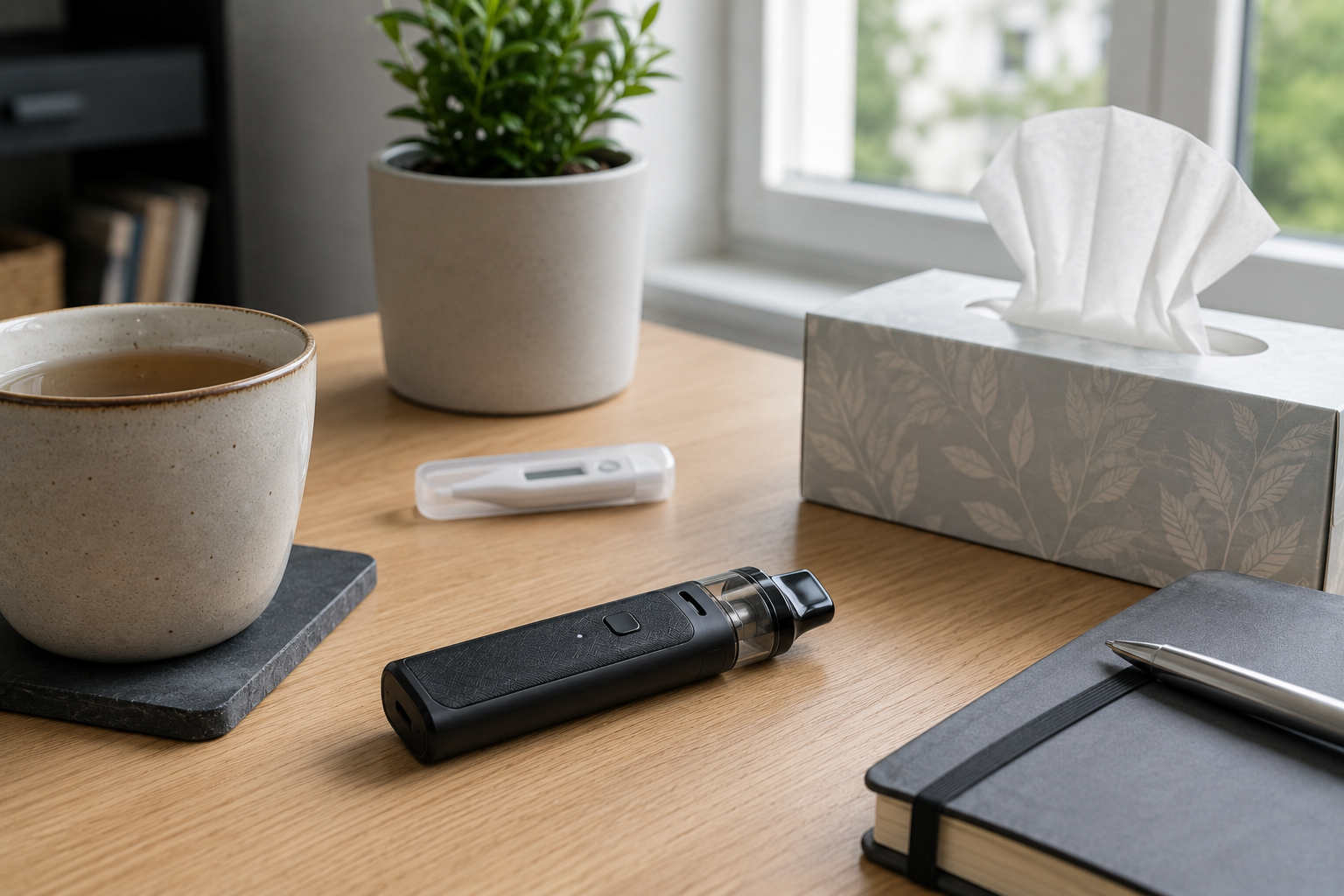
With COVID, flu, RSV and colds, the topic is not one single virus. It is about airways, symptoms, transmission and sensible everyday behaviour.
In brief
COVID is no longer the only topic.
Flu, RSV and cold viruses also affect the airways.
For vaping, the balanced position is: no panic, no trivialisation, no sharing devices and extra care when symptoms appear.
The question “vaping and COVID – are there interesting facts?” made sense in 2020. Today it is too narrow. COVID remains a respiratory virus, but flu, RSV and other cold viruses also circulate in everyday life. For adult vapers, the better question is: what does vaping mean in the wider context of respiratory infections?
This article is not a diagnosis and not personal medical advice. It gives context for what can be said responsibly: respiratory infections spread through droplets and aerosols, e-cigarettes create an inhaled aerosol, and when symptoms are present, consideration for others matters more than habit.
The key point
There is no serious reason to present vaping as protection against COVID, flu or colds. At the same time, one headline cannot replace careful interpretation of the evidence.
Why COVID, flu and RSV should be considered together
COVID, flu and RSV are different infections, but they affect the same area: the respiratory tract. Symptoms can overlap, and transmission often happens through droplets and aerosols from the respiratory tract. That is why Swiss public-health communication increasingly discusses these pathogens together as respiratory viruses.
In daily life, this means the issue is not only one test result or one virus name. What matters is whether someone has symptoms, is in close contact with others, is indoors, or has contact with people at higher risk.
What does this mean for adult vapers?
E-cigarettes heat liquid and create an aerosol that is inhaled and exhaled again. This aerosol is not the same as tobacco smoke, but it is also not simply “clean air”. Vaping should therefore be handled with extra consideration when someone has a cold, cough, sore throat or fever.
In practice, this means: do not vape near other people when sick. Do not share the device. Keep the mouthpiece clean. Pay attention to distance and ventilation indoors. And when symptoms are strong or persistent, get medical advice instead of treating it as “just a cough”.
Wrong conclusion
“Vaping protects against viruses” or “vaping while sick does not matter”.
Better reading
With respiratory infections, consideration matters: distance, hygiene, no sharing, and taking symptoms seriously.
What does the evidence say?
Research on vaping and respiratory infections is not as simple as many headlines suggest. A newer systematic review describes mixed findings in human observational studies on COVID-19 and other respiratory infections. At the same time, experimental studies indicate that e-cigarette exposure, compared with non-use, may be linked with greater susceptibility to respiratory infections.
The correct conclusion is cautious: vaping should not be described as harmless for the airways. But individual studies should also not be treated as final proof. Study design, comparison group, previous smoking, dual use and whether the evidence comes from laboratory, animal or human studies all matter.
Editorial position
With COVID, flu and other respiratory infections, vaping is not a protective factor. For adult users, the practical rule is: take symptoms seriously, protect others and do not share devices.
Should you vape when you are sick?
Anyone with coughing, sore throat, fever, shortness of breath or a strong feeling of illness should be especially careful. Vaping may feel scratchy or unpleasant when the airways are already irritated. If symptoms are strong or last longer, they should be checked medically.
The social aspect also matters. Someone who is sick should not unnecessarily expose others to aerosols, close contact or shared objects. This applies whether the infection is COVID, flu, RSV or another respiratory virus.
Practical rules for everyday life
The most useful rules are simple: do not use the same device as someone else, keep the mouthpiece clean, wash hands, keep distance when symptomatic and ventilate indoor spaces. Anyone in contact with older people, pregnant people, people with health conditions or small children should be especially careful.
These rules sound unspectacular, but they are more useful than exaggerated claims. Respiratory infections do not spread through headlines. They spread through proximity, air, surface contact and everyday habits.
Conclusion
The old question “vaping and COVID” is too narrow today. It is more useful to look at respiratory infections overall: COVID, flu, RSV and seasonal cold viruses.
The balanced answer is: vaping is not protection against infections, e-cigarettes are not risk-free, and the evidence on respiratory infections is complex. Anyone with symptoms should be considerate, avoid sharing devices, keep distance and seek medical advice for serious symptoms.
Frequently asked questions
Does vaping protect against COVID or flu?
No. There is no serious basis for presenting vaping as protection against COVID, flu, RSV or cold viruses.
Should you vape with a cough or fever?
With respiratory symptoms, caution and consideration for others are important. Strong, unusual or persistent symptoms should be checked medically.
Can you share a vape when sick?
No. A vape should not be shared, especially during colds, flu, COVID or other respiratory infections.
Is this only about COVID?
No. For everyday life, flu, RSV and other seasonal respiratory viruses are also important.
Sources and further information
FOPH: Respiratory viruses
CDC: About E-Cigarettes
Systematic Review 2025: Respiratory health effects of vaping e-cigarettes