Vape.ch Knowledge Switzerland
CBD: What is it exactly?
CBD stands for cannabidiol. It comes from the hemp plant, but it is not the same as THC and should not be automatically confused with a classic cannabis high.
CBD Cannabidiol Hemp Switzerland
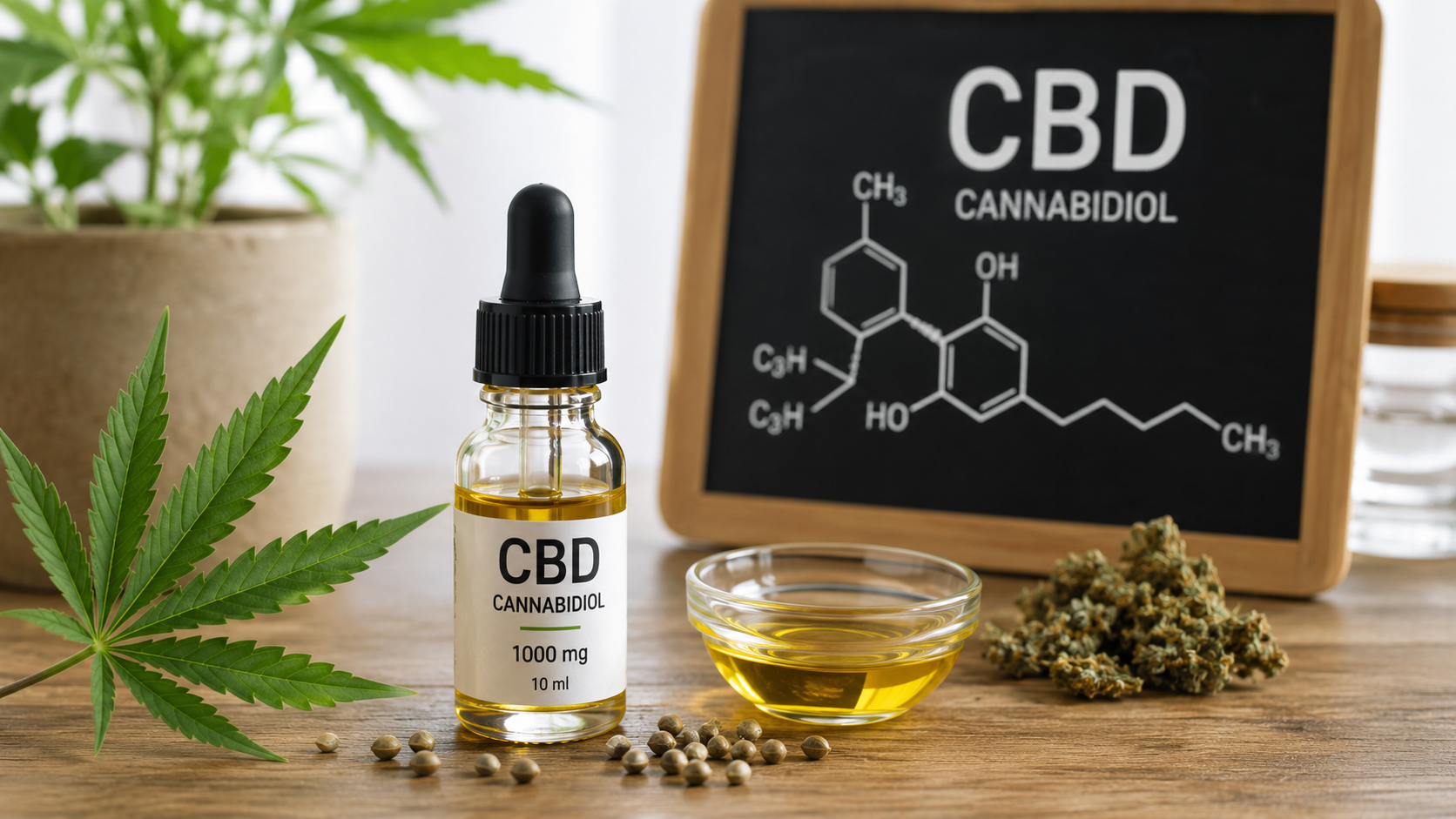
CBD is often confused with cannabis in general. The cannabinoid, THC content, product category and legal framework are decisive.
In short
CBD means cannabidiol.
CBD is not the same as THC.
In Switzerland, THC content and product category are especially important.
Hemp is a versatile plant. Hemp can be used to produce fibres, textiles, paper, building materials, food raw materials and various cannabis products. However, many people first think of cannabis as an intoxicant when they hear hemp. This is exactly where the confusion around CBD begins.
CBD is a component of the hemp plant. Its full name is cannabidiol. Like THC, it belongs to the group of so-called cannabinoids. The key difference: THC is the substance mainly responsible for the intoxicating effect of cannabis. CBD, on the other hand, is not equated with a classic cannabis high.
The most important classification
CBD is not automatically a “drug”, “medicine” or “harmless natural product”. Product, THC content, use and legal classification are decisive.
What is CBD?
CBD stands for cannabidiol. It occurs naturally in the hemp plant and can be extracted from hemp. CBD products exist in very different forms: flowers, oils, cosmetic products, liquids, aroma products or products with another intended use.
This is exactly why CBD should not be judged only by its name. A CBD oil, a CBD liquid, a CBD flower and a medical cannabis product are not automatically the same legally or practically.
CBD and THC: the difference
THC stands for tetrahydrocannabinol. It is the best-known psychoactive component of cannabis. CBD is another cannabinoid and is not used for an intoxicating effect. Many misunderstandings arise because both substances come from the same plant family.
For consumers, it is important to know: a CBD product can still contain traces or small amounts of THC. In Switzerland, THC content is therefore a central legal limit.
CBD
Cannabidiol, not the typical intoxicating substance in cannabis.
THC
Tetrahydrocannabinol, the main psychoactive substance in cannabis.
How should CBD be classified in Switzerland?
In Switzerland, cannabis products are only permitted if they contain less than 1 percent THC. From that point on, however, it does not automatically become simple. Depending on whether a CBD product is offered as a tobacco substitute, cosmetic, chemical, food or medicinal product, different requirements apply.
That is why “CBD is legal” is too imprecise as a blanket statement. More accurately: CBD products must fit the respective product category, be correctly declared and comply with the applicable Swiss requirements.
What does the FOPH say about cannabis and CBD in Switzerland?
The FOPH classifies cannabis in Switzerland clearly by THC content. Cannabis with a THC content of at least 1 percent is generally prohibited in Switzerland. Cannabis products with less than 1 percent THC are not subject to the same narcotics ban, but they must still comply with the applicable product rules.
This means CBD is not automatically free for every use. What matters is whether a product is offered as a tobacco substitute, cosmetic, chemical, food, medicinal product or in another category. Depending on the intended purpose, different requirements apply to declaration, safety, advertising and marketability.
For consumers, the most important rule is simple: pay attention to THC content, product category, serious declaration and a Swiss source. Particular caution is needed with CBD products for ingestion, inhalation or products with health-related claims, because not every product form is automatically permitted or sensible.
CBD products should therefore not be advertised or bought with medical promises unless they are a correspondingly authorised medicinal product. For normal consumer products, the rule is: check soberly, do not believe healing promises and use products only for their intended purpose.
Practical rule
With CBD, do not only look at the name. THC content, origin, declaration, product type and a reputable source are important.
Does CBD make you high?
CBD is not associated with the classic cannabis high. The intoxicating effect of cannabis is mainly linked to THC. Nevertheless, CBD should not be treated as a meaningless wellness term.
Anyone using CBD products should pay attention to product quality, THC content, possible interactions, usage instructions and their own situation. Medical advice is sensible when taking medication, during pregnancy, breastfeeding or in case of health questions.
CBD and vaping
CBD can also occur in products that are inhaled. Particular caution is needed here: not every CBD product is suitable for vaping. Oils or products with unsuitable carrier substances do not simply belong in an e-cigarette.
Only products expressly intended for this use should be considered for vaping. Unsafe mixtures, self-experiments or vaporising arbitrary CBD oils are not a good idea.
Why CBD products should be checked seriously
Transparency and quality are especially important with CBD products. CBD content, THC content, product category and possible additives should be traceable. Unreliable products may be incorrectly declared or contain unsuitable ingredients.
Precisely because CBD sits between hemp, lifestyle, consumer product and possible medical perception, it needs sober classification. No healing promises, no panic, just clean information.
Conclusion
CBD means cannabidiol and is a component of the hemp plant. It is not the same as THC and should not automatically be equated with a cannabis high.
In Switzerland, THC content, product category, declaration and quality are especially decisive for CBD products. Anyone using or buying CBD should choose reputable products, not believe medical promises and use products only for their intended purpose.
Frequently asked questions
What does CBD mean?
CBD stands for cannabidiol, a natural component of the hemp plant.
Is CBD the same as THC?
No. CBD and THC are different cannabinoids. THC is mainly known for the intoxicating effect of cannabis.
Is CBD permitted in Switzerland?
Cannabis products are only permitted in Switzerland if they contain less than 1 percent THC. In addition, further rules apply depending on the product category.
What does the FOPH say about cannabis and CBD?
The FOPH classifies cannabis in Switzerland mainly by THC content. Below 1 percent THC, a product is not subject to the same narcotics ban, but depending on the product category it must comply with the applicable Swiss requirements.
Can every CBD oil be vaped?
No. Only products expressly intended for vaping should be inhaled. Normal CBD oils do not automatically belong in an e-cigarette.
Sources and further information
Swissmedic / FOPH / FSVO / FOT / FOAG: Products containing cannabidiol: overview and implementation guide