Vape.ch CBD & Hemp Knowledge
Terpenes: What are they and what do they have to do with CBD?
Terpenes are natural aromatic compounds found in many plants. They shape the scent of herbs, citrus fruits, conifers and also hemp.
Terpenes CBD Hemp Aroma
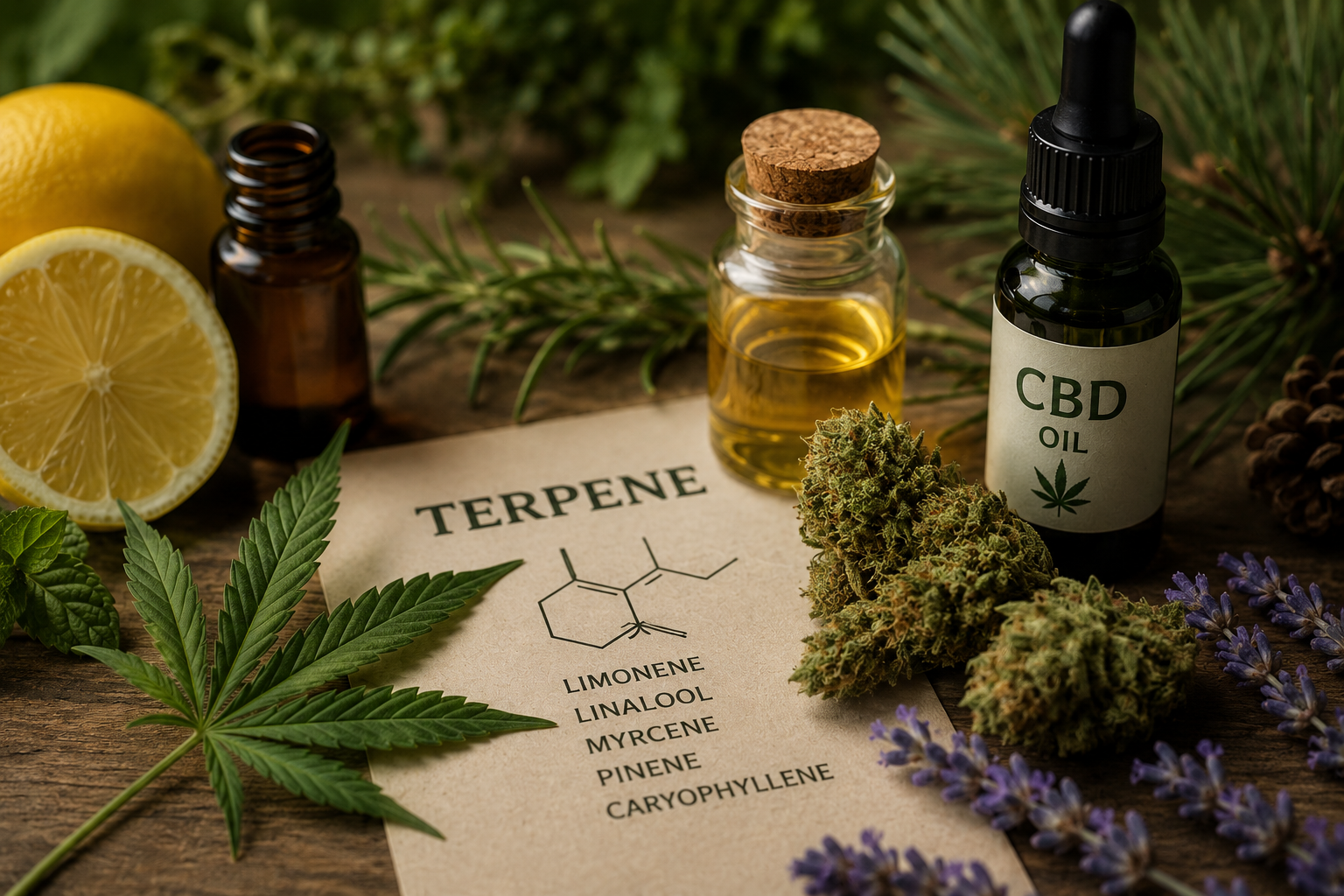
Terpenes are responsible for many plant scents. In hemp and CBD products, they mainly shape aroma, smell and sensory character.
In short
Terpenes are natural aromatic compounds in plants.
They also occur in hemp and influence smell and taste.
Health claims around terpenes should be viewed critically.
Terpenes are not a secret and not an exclusive cannabis topic. They occur in many plants and are an important component of essential oils. When a lemon smells fresh, a conifer forest smells resinous or lavender is immediately recognisable, terpenes play an important role.
The hemp plant also produces terpenes. This is why different hemp or CBD products can smell very different: citrusy, spicy, earthy, floral, resinous or fresh. For consumers, terpenes are mainly interesting because they shape a product’s aroma profile.
The most important classification
Terpenes mainly explain smell, taste and strain character. They are not a free pass for medical claims.
What are terpenes?
Terpenes are chemical compounds that occur naturally in plants. Many plants use them for scent, protection, communication with their environment or defence against certain influences. For humans, they are mainly perceived through smell and taste.
Terpenes are not only found in hemp. They also occur in citrus fruits, herbs, spices, conifers, lavender, mint, hops and many other plants. This is why some hemp strains smell citrusy, while others smell more pine-like, floral or earthy.
What do terpenes have to do with CBD?
CBD stands for cannabidiol and is a cannabinoid. Terpenes, on the other hand, are not cannabinoids but aromatic compounds. Nevertheless, both can occur in the same hemp plant. A CBD product can therefore contain CBD and also have a terpene profile.
Terpenes are often discussed in connection with CBD flowers, CBD extracts or CBD liquids because they strongly influence aroma and sensory perception. Two products with a similar CBD content can feel, smell or taste very different if their terpene profile differs.
CBD
A cannabinoid of the hemp plant, not responsible for aroma.
Terpenes
Aromatic plant compounds that shape smell and taste.
Typical terpenes in hemp
In hemp products, terpenes such as myrcene, limonene, pinene, linalool, caryophyllene or humulene are often mentioned. These names sound technical, but they describe compounds that also occur in other plants. Limonene, for example, is associated with citrus aromas, pinene with pine-like notes and linalool with floral, lavender-like impressions.
Important: such descriptions are aromatic classifications, not guaranteed effect claims. A terpene name on a product does not replace clean declaration, laboratory analysis or a realistic classification of the product.
Practical rule
Terpenes help to understand the aroma and character of a CBD product. They should not be used as a medical sales argument.
What is the entourage effect?
The so-called entourage effect describes the assumption that cannabinoids, terpenes and other plant compounds may be perceived differently or be biologically relevant together compared with isolated individual substances. This term is used very frequently in the CBD and cannabis field.
However, the research on this is not as simple as marketing texts often suggest. There are scientific discussions and individual indications of interactions, but blanket statements such as “terpenes definitely enhance CBD” or “terpenes have this specific effect” are too strong. A serious formulation is more cautious: terpenes can be part of a product’s overall profile, but this does not result in a proven health claim.
Terpenes in CBD products: what to look for?
For CBD products, the term “terpenes” is not the only important factor. Product category, ingredients, origin, THC content, laboratory analysis and intended use are decisive. In Switzerland, CBD products can be classified differently depending on their purpose, for example as tobacco substitutes, cosmetics, chemicals, food or medicinal products.
Particular caution is needed with products intended for inhalation. Not every aromatic compound and not every oil is suitable for vaping. Only products expressly intended for the respective application should be used accordingly.
Why do CBD products smell so different?
The smell of a CBD product is not caused only by CBD. CBD itself is not the main reason for a citrusy, earthy or resinous aroma. These impressions are strongly linked to terpenes and other volatile aromatic compounds.
This is why one strain can feel fresher, while another can seem heavier, spicier or more floral. For many users, the aroma profile is an important factor when choosing a product, without this automatically leading to health-related statements.
Conclusion
Terpenes are natural aromatic plant compounds. They occur in many plants and also shape smell, taste and strain character in hemp and CBD products.
For CBD products, terpenes are interesting, but they are no replacement for serious product data. THC content, product category, declaration, laboratory testing and realistic, non-medical communication remain decisive.
Frequently asked questions
Are terpenes the same as CBD?
No. CBD is a cannabinoid. Terpenes are aromatic plant compounds that mainly influence smell and taste.
Do terpenes only occur in cannabis?
No. Terpenes occur in many plants, for example in citrus fruits, lavender, mint, hops and conifers.
Are terpenes healthy?
Terpenes are natural plant compounds, but this does not create a general health claim. Product, application, quantity and quality are decisive.
Are terpenes automatically safe for vaping?
Not automatically. For inhalation, only products expressly intended for this purpose should be used. Arbitrary essential oils or aromatic compounds do not simply belong in an e-cigarette.